Friday, July 12, 2019

     The Tamworth Farmers' Market began the practice of doubling patron's SNAP/New Hampshire EBT dollars four years ago. People who might not otherwise have access to healthy fruits and vegetables, grown by local farmers, can access great food and experience the interwoven community of the farmers' market. This program is supported by donations. Our project has two goals. The first is to raise $500 toward the support of this project. The second goal is to raise awareness about the program. Along the way we will offer the soulful experience of shared music.
     A string trio with connections to Tamworth has been preparing a concert of chamber music called "Feast for the Soul." The trio is Chris Nourse and Amy Berrier, both long-time Tamworth residents and community organizers, and Ellen Schwindt, long-time participant in the Tamworth community, even though she is from "away." They will play music for two violins and viola, for piano and violin, and piano and viola.
The concert portion of our project takes place at St. Andrews in the Valley on Saturday, July 20th at 5:00 pm. In accordance with the spirit of the project, the music will be offered as a gift, with no admission fee charged. Attendees may make a donation at the concert to support this program.
      A GoFundMe campaign makes it easy for people to support this campaign without needing to attend the concert. You can find the campaign by searching for “Feast for the Soul” on GoFundMe.com. We hope you come enjoy the music AND make a donation to support your neighbors in buying healthy food and creating a healthy community. All of the Funds raised through GoFundMe will go to the Tamworth Farmers Market SNAP doubling program.
     Thrivent Financial has already contributed seed money that we will use to provide St. Andrews in the Valley with a building use fee and to tune the piano. The trio has contributed many hours to preparing the music and producing the concert as well as materials costs like poster printing and program printing. 
     We are excited to contribute our energy and spirit to this project. It is a realization of the truth that we are all connected and that our community is stronger when we all have access to the bounty of the earth. We welcome your support and are grateful for the many ways our friends and neighbors help us weave a strong community web.


Tuesday, April 30, 2019

Water in Spring

flow all around us

Here at the end of April, I am daily grateful for the water flowing around me. I like the smell of the wet air and the rush and gurgle and sight of the river testing its banks. We all learned about the water-cycle in school--somewhere around second grade or so; we drew pictures of rain falling, running downhill, collecting in streams and rivers, and making its way, at long last, to the ocean, only to be evaporated and start the cycle all over again. 

image from Vecteezy
Of course it is so much more complicated than that. Yes, there are mountains and rivers and the ocean, so easy to represent on an info-graphic. In real life there are boulders and hillocks and bogs and plants and roads and pavement and houses and surfaces of a semi-permeable and impermeable and a very permeable nature along with everything in between that have a say in where the water goes. 

Just one month ago, our field was still covered with about 2 feet of snow. That's a lot of water. I've been enjoying watching it melt, listening to it melt, and following it's paths in my garden and woods. As I've mentioned in previous posts--all that snow we received over the winter could mean freedom from hauling water next fall. Our spring has run very low several times over the last few years; so low that we've had to rely on hauling water. 

Last summer, when we were preparing for a dry autumn, I read a book called Rainwater Harvesting for the Drylands and beyond by Brad Lancaster.  It changed the way I looked at my garden beds. In the book Mr. Lancaster suggests donning a raincoat and boots to traverse the land when the rain is actually coming down. I've had plenty of opportunity to do that in the last couple of weeks. Watching this water course down the hill gave me ideas for reworking my garden patches with hugelkulture swales to catch and store the water as it flows down the hill. Hugelkulture is an example of planning without worry; knowing there will be dry weeks at the end of summer, we plant on natural sponges that retain moisture over these dry times. It's a hopeful and realistic outlook. On many days of hydrology explorations I didn't quite stop at the edges of my growing plots and found myself in the woods following the path of the stream fed by our now-overflowing spring. On several occasions, I went armed with my hand-held recorder. The result is a return of improvising with the birds; I'll be playing along with the sounds of forest rain, streams gurgling, and spring birds singing at Music for Meditation. 
A place in our woods where the water
gurgles unseen under the ground

One amazing aspect of this is how much water one can hear on the move even when it's not obvious to the eye. This particular pile of wet leaves sounded like a rushing stream. Walking over the ground in these woods is not quite straightforward; there are downed trees and boulders and hillocks of unknown origin on every turn. The water makes a quite slow path down the hill, and much of it simply soaks in--an ideal situation for the trees and other plants of the forest. Though it might not rain for all of June again this year, there is water now and it is being held in the reservoirs of all that detritus that the forest stores on its floor. It will be there when the trees need it all summer long. 

All this thinking about water jogged my memory about a scientific field of inquiry. Some scientists have found evidence that water is changed structurally by the substances with which it has come into contact. They've demonstrated that water can transmit information about these substances through electromagnetic signals--a kind of water-memory. I learned more about this fascinating vein of investigation by watching this documentary about Nobel laureate, Luc Montaigner. 

Since I've spent about the same amount of time on agricultural and nature observation as I have practicing, I'm especially grateful to Judy English and Sue Reid for playing at Sunday's event. Judy and I will play a piece by Cecile Chaminade called spring. It is full of sounds of running water and birdsong to my ear.  Sue will share some very cheerful Schubert and a lovely rendition of Beethoven's Moonlight Sonata: the Sustenuto opening movement. That beloved piece of music proportedly received its popular title because it reminded a listener of moonlight reflecting off of Lake Lucerne. 

Music as Meditation will take place on Monday, May 5 at 5 PM at Christ Episcopal Church in North Conway. The event is offered in the spirit of a gift. I hope to share the spring spirit with many of you. 


Thursday, March 28, 2019

Spring is Here

if you know where to look


     I went for my usual snowshoe today. The sun on my face felt warm. The water pooled behind the back shed door was beginning to navigate its daily phase change from solid to liquid. I found more patches of bare ground in the woods than I saw on my last ramble over this forest. 


          Some of these patches persisted all winter, even during the snowiest times, in places where liquid water flowed on the warmest of days. Now they are growing. I imagine that the forest creatures are as glad for them as I am--or maybe more glad, since they provide water, I'm sure, for deer and fox and such. 


           I am always glad to see the evidence of flowing water. Last month I posted a picture of our spring house nearly buried in snow. The snow is mostly still with us, but there is a clear stream-bed running downhill from the spring-house now. The progress of a month is evident in the percentage of brown and green showing in this photograph. In another month, there will only be little piles of snow and the forest will sport its new green leaves and early forest flowers.


     These small signs of spring turn my mind in the direction of windowsill seedlings, garden improvements, and that expansiveness only experienced when the temperature outside stays above freezing for weeks at a time. Even though my field is still covered in snow more than three feet deep, I am planning for summer. 
  

      The trees are planning too. For years I've been enamored of the looks of the Moose Maple as it prepares for a summer's profusion of large soft leaves. That particular shade of red and the smooth arc of diametrically opposed twigs decorated with fecund dagger-shaped buds and precise scribes always makes me stop to look deeply. 

      Then there are the beech trees. Hanging on to the parchment of last summer's leaves, they wrap their new spring green in tight golden spears. The cold spring breeze ruffles their paper-thin old leaves to make the most gentle sound. What better example do we need of enjoying the present while still preparing for the future without worry? I can't imagine the beech trees in their profusion worrying about what is to come at all. I can imagine them looking forward to the color combinations possible when the gold spears open up to the green-laced-with-red wet leaves, giving way to the clearest green of all, followed by the most valuable gold in the forest. Ubiquitous, but lovely, beech trees have much to teach us. 

   
      I am studying their lessons as I prepare for the next month's Music as Meditation. April 7th brings another opportunity to share my music with listeners in the quiet of the sanctuary at Christ Episcopal Church. I'll be playing one of Edvard Grieg's lyric pieces called "To Spring" and showing off a perky little polka-etude for piano. 
     
          Cecile Chaminade gave us an Elegie that I'll play to honor those trees long gone from the realm of the living, but still feeding the forest around them. I'll share some ideas for a new set of etudes in each major key and some themes from a string trio I completed in the past month. 
           
          It has not only been the forest reminding me of my connection to other beings this month. I experienced the fun of sending out one of my recent compositions to violinists I know. Three of these lovely people wrote back to thank me for the trio and to assure me that they would share it. Already 20 people have downloaded it from the International Music Score Library Project
    
          That success tapping into the web of us all, along with those trees preparing for the right moment to bring the world their leaves, leave me with a kind of optimism too rooted in reality to shake. I look forward to sharing it with listeners on Sunday, April 7 at 5 PM at Christ Episcopal Church in North Conway, NH. 


Thursday, February 21, 2019

Music as Meditation Resumes

Sunday, March 3, 2019

Our spring house looking from downhill. I am grateful for the water security 

all this snow will bring us next summer. 
As  March approaches on the calendar, I'm looking forward to sharing reflections of a very snowy winter at Music as Meditation. That series of contemplative music and words resumes on Sunday, March 3 at 5 PM at Christ Episcopal Church in North Conway, NH. I have new music of my own to share, along with a student-teacher duet, and some images about the arc of life gleaned from my woods on Davis Hill and my experiences over the last few months. 

I've been traversing my little bit of woods on a pair of silly plastic snowshoes. I purchased these snowshoes at the ESSC ski sale in the fall of 2002, when I had yet to experience a New Hampshire winter. They were inexpensive and I thought my kids might use them. It turns out that these toys are my current favorite snow accouterments. They allow me access to my beloved woods despite 5 feet of snow on the ground.

     The first snow of 2002 came on October 25th--a fact I remember because it was my son's 13th birthday. I remember his joy at that first New Hampshire snowfall. I'm not sure he retained that joy in the first snow as he gained a few more years and more experience of North Country winter from the working end of a snow shovel. Now he lives in Colorado where he can enjoy winter without needing to shovel much since snow there usually melts directly after falling.  I say usually because I recently experienced the joy of walking through his snowy Colorado neighborhood with him and his dog Lucy in tow; as we made our way around the lake near his house, I witnessed sparks of that eager child still residing in my grown-up boy. 

I arrived in Colorado from my hometown of Salina, Kansas, chauffered by that really-rather-mature young man who is my son. He picked me up from my parent's house where I'd been trying to help my very competent mother recover from knee surgery. I say trying to help, because she had made such preparations, and there were so many solicitous relatives around that nobody could help much, but we all enjoyed the family fellowship and rehearsing our shared heritage through stories, knitting, cooking, and music. 


After that refreshing time with family, I found myself home and sitting at my beloved Chickering. I almost didn't know how to begin, but I reached out and played a resonant E flat chord. What came next can only be described as a gift; in one sitting, this etude fell out of the sky and into my hands. I'll be playing it at Music as Meditation.  


My friend Ann Strachan will join me for Arvo Pรคrt's Spiegel im Spiegel. This piece never fails to smooth over any ruffled feathers I have and make me aware of the essential peace subtending our temporal existence. Ann and I, who are age-mates, have spent some time talking about this peace as we've prepared this music and enjoyed sharing life stories. 
    
Though it is true that we cannot transcend our time of life, we do have the ability to experience something of the eternal through our reflections. This season, I've been contemplating trees and how those beings exist in the eternal cycle of growth and decay. You can read a photo poem called Amid The Forest by clicking on the page by that title on the right-hand side of this blog. 


Saturday, February 2, 2019

Salina Meditations


    Tomorrow is the first Sunday of February. I had planned to return to my Music as Meditation Schedule, but priorities I often forget to pay attention to caused me to change my mind. I am spending some time in my hometown--Salina, Kansas, instead. Don't come to Christ Church tomorrow. I do hope to be back at the Steinway in beautiful North Conway on the first Sunday in March. In the meantime, I'm engaging in some Salina Meditations.

    Today is a beautiful spring day; I know the calendar does not indicate spring on this groundhog day, but the temperature and the humidity do. If I lived here, I would be tempted to plant some peas today in the hopes that I would get a very early crop. The air is rich with moisture, the sidewalks are wet, and the ground smells like Kansas. 

     This morning I played Mary Had a Little Lamb on the piano in my childhood living room with grand-niece who is seven years old. She just had her first piano recital, shepherded into this experience by my sister who is also a piano teacher. Later today, my sister and I will likely make some family music. 

     Every time I visit my family and this town I am grateful for the strong heritage the "accident" of my birth gave me. I drew my first breath in a musical family living in a musical town. I began piano lessons even before I could really read words, making music a language as natural to me as the brand of English people speak out here, giving extra vowels to many syllables and making a breathy sound at the beginnings of WH words. I even heard my mother say "strip-ed" (two syllables!) yesterday. 

    So instead of a Musical Meditation this month, I offer you a photo meditation of my hometown. I just wish you could hear the accent embedded in the photo captions. 
Yes, Grain elevators really do look like that. 

You can't really see the mural painted on the glass windows that top this Art-Deco warehouse in the North end, but they always remind me of the art classes I attended in those warehouse buildings.

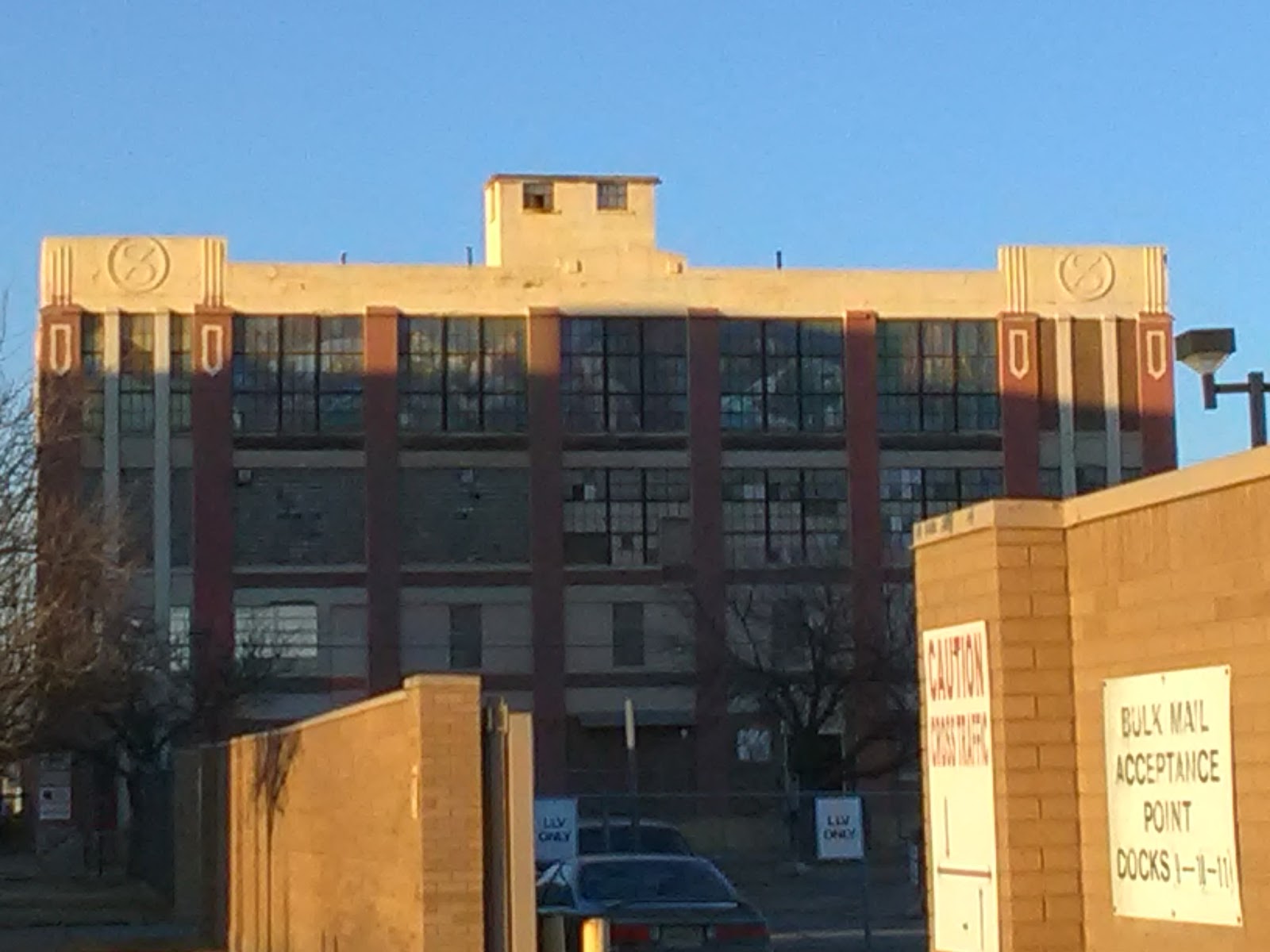
I'm fascinated with this old warehouse building which belonged to the Lee company. I've taken many artsy pictures of it over the years. This is the latest.
This is the bike bike rack stationed at the City's new "Field House."I love its self-referential nature. 
And this is home.

I'll see you all in March. Several people are planning to play with me. We'll have some violin and piano music, and some flute and piano music. Who knows what else the Kansas light and landscape will inspire. 


Friday, November 23, 2018

Indra's Net Revisited

Indra's Net

"Far away in the heavenly abode of the great god Indra, there is a wonderful net which has been hung by some cunning artificer in such a manner that it stretches out infinitely in all directions. In accordance with the extravagant tastes of deities, the artificer has hung a single glittering jewel in each "eye" of the net, and since the net itself is infinite in dimension, the jewels are infinite in number. There hang the jewels, glittering "like" stars in the first magnitude, a wonderful sight to behold. If we now arbitrarily select one of these jewels for inspection and look closely at it, we will discover that in its polished surface there are reflected all the other jewels in the net, infinite in number. Not only that, but each of the jewels reflected in this one jewel is also reflecting all the other jewels so that there is an infinite reflecting process occurring."

This quote comes from a well-documented Wikipedia articles on Indra's Net. It is cited as coming from this book: Cook, Francis H. (1977) Hua-Yen Buddhism: The Jewel Net of Indra, Penn State Press, ISBN 0-271-02190-X. 

I'm inspired to post here my musical reflection on this scripture. I chose to write a fugue on this text a few years ago. Here is a recording made by my friends--each of whom is a pearl of great price who reflects the light of all, to be sure. In case you have a group of friends who sing and you want the sheet music, here is the SSAB version and here is the SATB version of the piece. 

A fugue seemed appropriate since each voice reflects the other voices--like the jewels in the net. This conception of the universe as filled with being capable of reflrecting and re-reflecting light from the source is a comfort to me. If I am one of the jewels all I have to do is faithfully let the light that comes from others, and from the pervasive and unnameable source shine through me. It is a beautiful vision. 


Tuesday, November 6, 2018

The students of 

Davis Hill Studio
present


       Eaton Village will be the scene for a program of autumn-oriented piano music On Friday, November 9th at The Little White Church. Students from the Davis Hill Studio will play a recital of piano music on the beautiful Steinway piano at the Little White Church. The venue's high windows, old-fashioned lights, and picturesque setting will be perfect for listening to autumnal pieces. The selections range from the creepy to the transcendent. The program includes music about a haunted house, music by Dmitri Kabelevsky, a march by Dmitri Shostakovich, Edvard Grieg's “In the Hall of the Mountain King,” and the slow movement from Beethoven's Pathetique Sonata. Some of the students are as young as 7 and some have been playing piano for more than 50 years.
       The concert takes place at 6:30 PM. The recital is presented by Ellen Schwindt, teacher at the Davis Hill Studio. Call 603-447-2898 for more information or e-mail ellenmschwindt@gmail.com