Saturday, February 2, 2019

Salina Meditations


    Tomorrow is the first Sunday of February. I had planned to return to my Music as Meditation Schedule, but priorities I often forget to pay attention to caused me to change my mind. I am spending some time in my hometown--Salina, Kansas, instead. Don't come to Christ Church tomorrow. I do hope to be back at the Steinway in beautiful North Conway on the first Sunday in March. In the meantime, I'm engaging in some Salina Meditations.

    Today is a beautiful spring day; I know the calendar does not indicate spring on this groundhog day, but the temperature and the humidity do. If I lived here, I would be tempted to plant some peas today in the hopes that I would get a very early crop. The air is rich with moisture, the sidewalks are wet, and the ground smells like Kansas. 

     This morning I played Mary Had a Little Lamb on the piano in my childhood living room with grand-niece who is seven years old. She just had her first piano recital, shepherded into this experience by my sister who is also a piano teacher. Later today, my sister and I will likely make some family music. 

     Every time I visit my family and this town I am grateful for the strong heritage the "accident" of my birth gave me. I drew my first breath in a musical family living in a musical town. I began piano lessons even before I could really read words, making music a language as natural to me as the brand of English people speak out here, giving extra vowels to many syllables and making a breathy sound at the beginnings of WH words. I even heard my mother say "strip-ed" (two syllables!) yesterday. 

    So instead of a Musical Meditation this month, I offer you a photo meditation of my hometown. I just wish you could hear the accent embedded in the photo captions. 
Yes, Grain elevators really do look like that. 
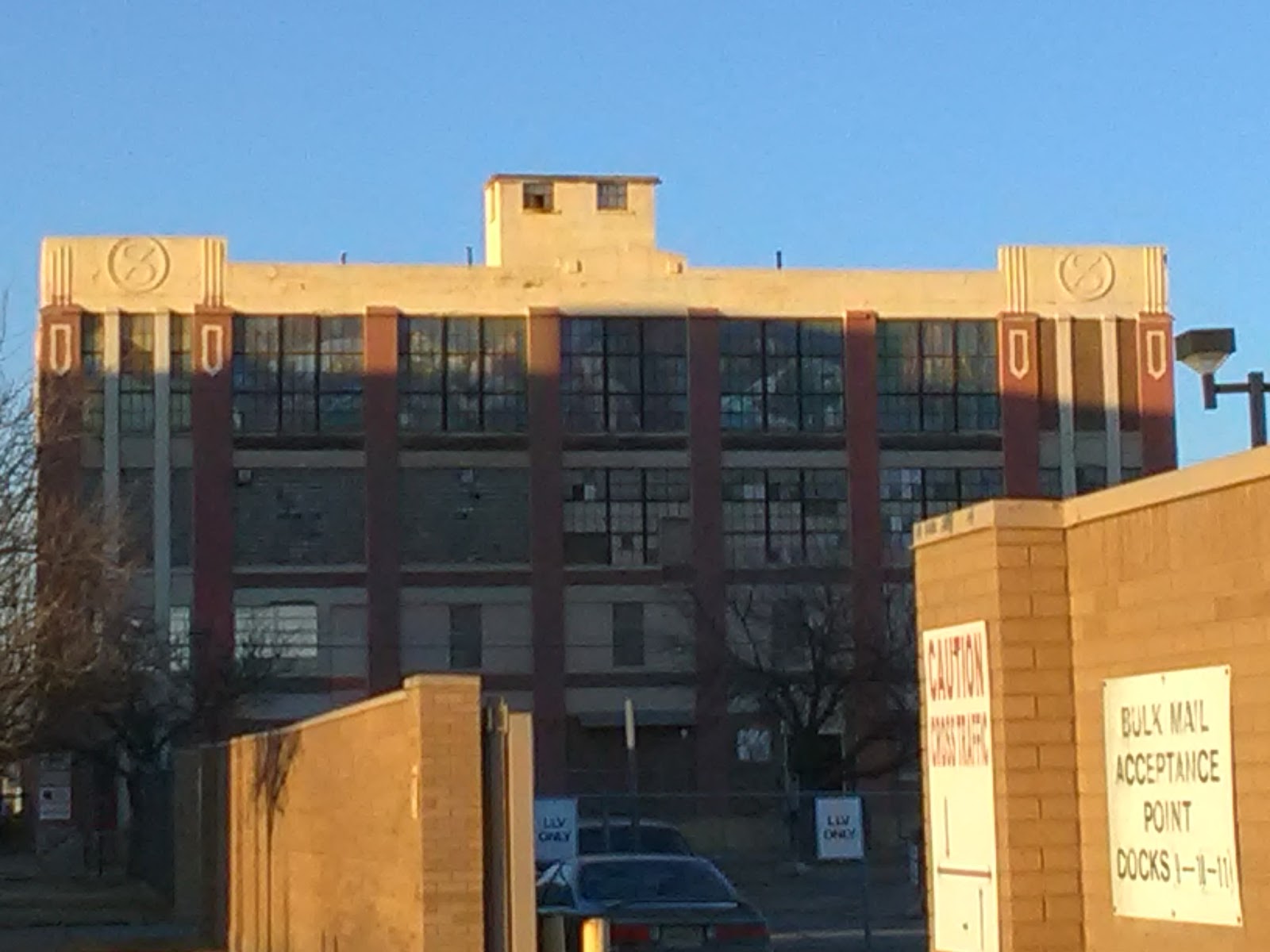
You can't really see the mural painted on the glass windows that top this Art-Deco warehouse in the North end, but they always remind me of the art classes I attended in those warehouse buildings.

I'm fascinated with this old warehouse building which belonged to the Lee company. I've taken many artsy pictures of it over the years. This is the latest.
This is the bike bike rack stationed at the City's new "Field House."I love its self-referential nature. 
And this is home.

I'll see you all in March. Several people are planning to play with me. We'll have some violin and piano music, and some flute and piano music. Who knows what else the Kansas light and landscape will inspire. 


Friday, November 23, 2018

Indra's Net Revisited

Indra's Net

"Far away in the heavenly abode of the great god Indra, there is a wonderful net which has been hung by some cunning artificer in such a manner that it stretches out infinitely in all directions. In accordance with the extravagant tastes of deities, the artificer has hung a single glittering jewel in each "eye" of the net, and since the net itself is infinite in dimension, the jewels are infinite in number. There hang the jewels, glittering "like" stars in the first magnitude, a wonderful sight to behold. If we now arbitrarily select one of these jewels for inspection and look closely at it, we will discover that in its polished surface there are reflected all the other jewels in the net, infinite in number. Not only that, but each of the jewels reflected in this one jewel is also reflecting all the other jewels so that there is an infinite reflecting process occurring."

This quote comes from a well-documented Wikipedia articles on Indra's Net. It is cited as coming from this book: Cook, Francis H. (1977) Hua-Yen Buddhism: The Jewel Net of Indra, Penn State Press, ISBN 0-271-02190-X. 

I'm inspired to post here my musical reflection on this scripture. I chose to write a fugue on this text a few years ago. Here is a recording made by my friends--each of whom is a pearl of great price who reflects the light of all, to be sure. In case you have a group of friends who sing and you want the sheet music, here is the SSAB version and here is the SATB version of the piece. 

A fugue seemed appropriate since each voice reflects the other voices--like the jewels in the net. This conception of the universe as filled with being capable of reflrecting and re-reflecting light from the source is a comfort to me. If I am one of the jewels all I have to do is faithfully let the light that comes from others, and from the pervasive and unnameable source shine through me. It is a beautiful vision. 


Tuesday, November 6, 2018

The students of 

Davis Hill Studio
present


       Eaton Village will be the scene for a program of autumn-oriented piano music On Friday, November 9th at The Little White Church. Students from the Davis Hill Studio will play a recital of piano music on the beautiful Steinway piano at the Little White Church. The venue's high windows, old-fashioned lights, and picturesque setting will be perfect for listening to autumnal pieces. The selections range from the creepy to the transcendent. The program includes music about a haunted house, music by Dmitri Kabelevsky, a march by Dmitri Shostakovich, Edvard Grieg's “In the Hall of the Mountain King,” and the slow movement from Beethoven's Pathetique Sonata. Some of the students are as young as 7 and some have been playing piano for more than 50 years.
       The concert takes place at 6:30 PM. The recital is presented by Ellen Schwindt, teacher at the Davis Hill Studio. Call 603-447-2898 for more information or e-mail ellenmschwindt@gmail.com

Wednesday, October 31, 2018


Music as Meditation: Mourning for Strangers


     In 1936 Paul Hindemith performed his composition TrauerMusik (Music for Mourning) to mark the death of King George V of England. Hindemith was in London to play another concert, but the King's death caused the authorities to cancel the concert planned. Hindemith spent the better part of a work day—from 11:00 AM to 5:00 PM crafting an 8-minute piece for the funeral. The piece ends with a Chorale Hindemith knew from Bach—what is often called Bach's “deathbed chorale.”

     It is safe to say that Paul Hindemith, an up-and-coming composer of the time, never met King George V personally. That remove did not stop him from writing lachrymose funeral music. The composer himself played solo viola in the piece's first performance. He wrote at length about the experience in a letter dated 23 January 1936, saying he "did some pretty hefty mourning." and that in the end the performance was "very moving.” 
     
     In our world full of violence and injustice on one hand and ubiquitous news on the other, I find frequent reasons to feel something like grief for strangers. November's Music as Meditation includes some music that comes from such feelings and some music that embraces the light that is always waiting for us on the other side of grief. Chris Nourse and I will play TrauerMusik and another piece from the repertoire of Paul Hindemith for viola and piano. Amy Berrier joins us to play a Vivaldi concerto for two violas. Amy and Chris will present a duo by Telemann. A piece by J.S. Bach, the final movement of my second piano sonata, and a poem complete the program. The poem arrived almost whole in my mind this morning, after an evening of practice and preparation. I print it here: 


Mourning for Strangers

If
we are all connected,
truly one,
simply imperfectly and temporarily differentiated inalienable motes of spirit and matter.
Then
It is nigh logical
this grief I feel for the world,

for the children forced to perform and conform,
for the grown-ups trapped by wanting,
for those who die a violent death
the news of which violence travels through the rest of us left
in shock-waves through ether.

It is right that in this time
as I watch myself and my fellows spin through days denying our very nature
that I find myself
mourning for strangers.


Tuesday, October 2, 2018


The End of Summer—The Beginning of the New Year

The Celts reckoned time differently than we do. They began counting the days of the year in the fall, when days are short and the nights long. This timing makes intuitive sense to me. The end of the summer—of the growing season—is the end of one cycle and the beginning of the earth's rest. Inevitably, this time of year induces reflection in me; I retrace steps, think about the possibilities of time to come, and evaluate where I am now. A lot of this reflection happens as I bring in the harvest—either while I'm standing still soaking up the last rays of warm sunshine or as I'm scurrying to and from from garden to root cellar ahead of an impending frost.

This year, when the warmth of the September sun turned to chill October rain, plans for the Music as Meditation program tracked the shift from light to dark in accordance with the season; light and dark music from regions of stillness and motion found its way onto the program at the impetus of some talented musicians who will share their gifts on Sunday. Doris Henney and Nancy Farris have been playing together to prepare a performance of Poulenc's flute sonata. This work is light and dark and still and moving; few musical pieces are lighter—but few are deeper.

The rest of the program continues the contrast of light and dark. Small pieces by Edvard Grieg, Béla Bartók, and J.S. Bach and Ellen Schwindt's improvisations weave through images and ideas for encouraging us to treasure the waning days of warmth left before the snow comes. One part of the program invites listeners to look as well as listen. I will be gathering some tokens of the changing season for our contemplation during one particular improvisation. I've been thinking of this kind of thing as participatory listening and I hope to hear from listeners how this practice plays for them. At the close of our time together, Nancy Farris will send us into the autumn evening with a virtuosic performance of Bach's Toccata and Fugue in d minor—that most famous of gifts J. S. Bach left for us all.

This Music as Meditation takes place at 5 PM at Christ Episcopal Church on the corner of Pine and Main Streets in North Conway. Admission is free. I hope to share this program with many of you.

Thursday, August 30, 2018

Music as Meditation
An Evening in the Country


Crickets begin to sing louder in late August. The sound is lovely, if ever-present in the open-windowed house. It signals the inexorable march of the calendar toward the time when nights will turn cool and the daylight will be in short supply. Though the season turns relentlessly to the cool and dark time of year, it is filled with sweetness. The abundance of garden, field, and forest surrounds us and we bask in the sunshine even as we plan for winter. September's Music as Meditation shares these ideas. The concert takes place at Christ Episcopal Church at 5 PM on Sunday, September 2.

Béla Bartȯk captured the feel of one of those long country evenings filled with the songs of crickets in a piano piece he composed for his album called Ten Easy Pieces. There is a languid melody punctuated by firefly dances--at least that's what I always picture. Bach's counterpoint captures inevitable change filled with beauty; I will play a fugue found in the music notebook J.S. Bach gave to his wife Anna Magdalena Bach. This fugue might be called the appogiatura fugue for its use of that expressive figure so like sighing. 


My friend Chris Nourse, violinist, joins me to play some pieces from a film version of A Secret Garden composed by Rolf Lovland. These pieces are exceedingly sweet and have something in common with the recently-completed second movement of my second piano Sonata. I'll share this piece on Sunday; the strains of which are sweet enough to make the listener appreciate silence at the end.

Saturday, June 16, 2018

The woods are full of ferns and bird calls, my garden is offering sweet young greens, and it's time for summer strings. A string orchestra will gather for rehearsals starting next Tuesday to prepare four new compositions for this year's concert. 

Andy Campbell contributes a piece called "Beetles." It's a romp in six eight time with unexpected harmonies and perky rhythms. Julia Howell wrote a piece informed by apples called "Pomology." In it, interesting rhythms and extended techniques will create unworldly sounds. I wrote a piece based on the buzzing of dragonflies and the memory of camp meeting hymns. Julia Howell will play a solo viola part in that piece. Larry Wallach has graced us with a piece called "Restless Hexachords" that explores the richness available from complex counterpoint. 

Bozena O'Brien, leads the orchestra as concert mistress. Andy Campbell lends his expertise as conductor. I am freshly amazed and grateful for freely-offered gifts each of our musicians and composers have offered. We will have another joyous concert. 

Again this year, we are aiming to keep Summer Strings as non-commercial as possible. The Unitarian Universalist Fellowship of the Eastern Slopes has lent us rehearsal space. Christ Episcopal Church has offered us the use of its facilities for the weekend festival and the performance. We do have a few associated monetary costs so we will again collect donations at the close of the concert. There are also a few volunteer roles for people interested in helping. There are several ways to support this project: please consider  the following
  • Attend the concert. Admission is free of charge. We will collect donations to offset the expenses of the festival at the end of the concert. 
  • Share information about the concert with your friends. 
  • Help usher and collect donations at the close of the concert.
  • Contribute a food item to share with the musicians on Saturday evening. The Orchestra will be rehearsing from 5:00 to 6:15. Then we will have a break for supper from 6:15-7:00. If you'd like to talk with the musicians, helping with supper and sharing a meal with us is a great way. I'll be providing lemonade. We could use a variety of cold salads. 
  • Make a donation. We try to keep the exchange of money to a minimum in this festival, but there are a few monetary costs we incur. All the musicians, composers contribute their time free of charge. Christ Episcopal Church donates the use of the venue for rehearsing and for performing. Volunteers hang posters and collect donations after the concert. The costs we incur are for travel stipends for musicians travelling a long way to participate, supper supplies, and for poster-printing costs. I estimate that the costs of the festival this year will total around $400. Should you wish to contribute, please use the Paypal button on the right-hand side of this page near the top. Alternatively, you can send a donation to Summer Strings c/o Ellen Schwindt, 783 Davis Hill Road, Center Conway, NH 03813. If I collect more funds than we need, these will be offered to the musicians who played. Any excess will be saved for another music endeavor. 
Last year, producing this concert renewed my faith in the power of community to create joy and connection. I expect that this year will be equally refreshing. I hope you can join us and join in the beauty we create.